New Weaving Studio in Huntsville, Alabama (Lowe Mill Arts & Entertainment)

Over the last month, I’ve been weighing my options concerning employment after I quit my job of two years at the end of September. Should I apply for another dead end job and be just as miserable as I was at the last one (even if the money might be better somewhere new)? Or should I take the plunge back into full-time self-employment again with its risks, but potentially, greater rewards?

I’ve never liked being under the thumb of someone else, even if it meant a steady paycheck. The older I get, the more time has become valuable to me. And I don’t want to spend what time is left to me not pursuing my ideal job. Yes, it’s a huge sacrifice and risk—especially now that my husband is also self-employed again. We aren’t wealthy people and never have been. But we’ve also both come to realize that while we are working for others, there will always be an income ceiling. Someone else gets to dictate how much we’re worth, and we’ve both been undervalued for years—mostly because it felt “safe” to get a steady paycheck, even if it was a sad, pathetic paycheck in comparison to the quality of work being produced.

All that to say, while it will be a huge risk, I’ve taken the plunge (with the blessing of my husband) and applied for a studio at Lowe Mill Arts & Entertainment a few weeks ago. I was juried in last week and my studio space is officially open as of November 6th.
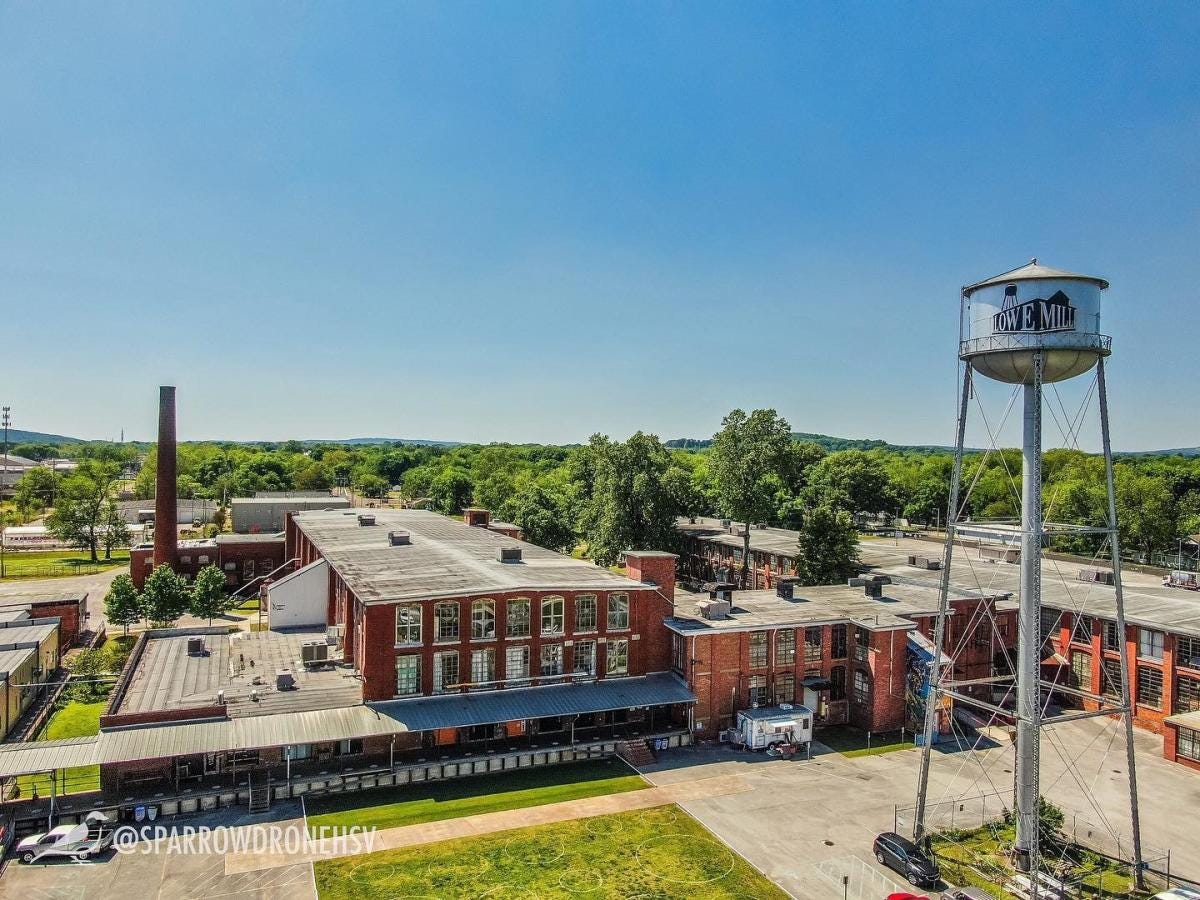
I’ll be teaching classes every week as well as selling my handwoven items in the studio. (I’ll still be teaching at other venues as well).

In addition to being at Lowe Mill, I’ve also been recruited as the weaving teacher at Studio 60 in Huntsville (3 minutes up the road from Lowe Mill)—a vibrant senior center where over 200 classes are offered for senior citizens in the Huntsville area. (This is not your average senior center, so click on the link above to check it out). There is a whole room dedicated to weaving—stocked full of looms of every kind, so I’m just as excited to start teaching there (every Wednesday) as I am about my own weaving space at Lowe Mill.
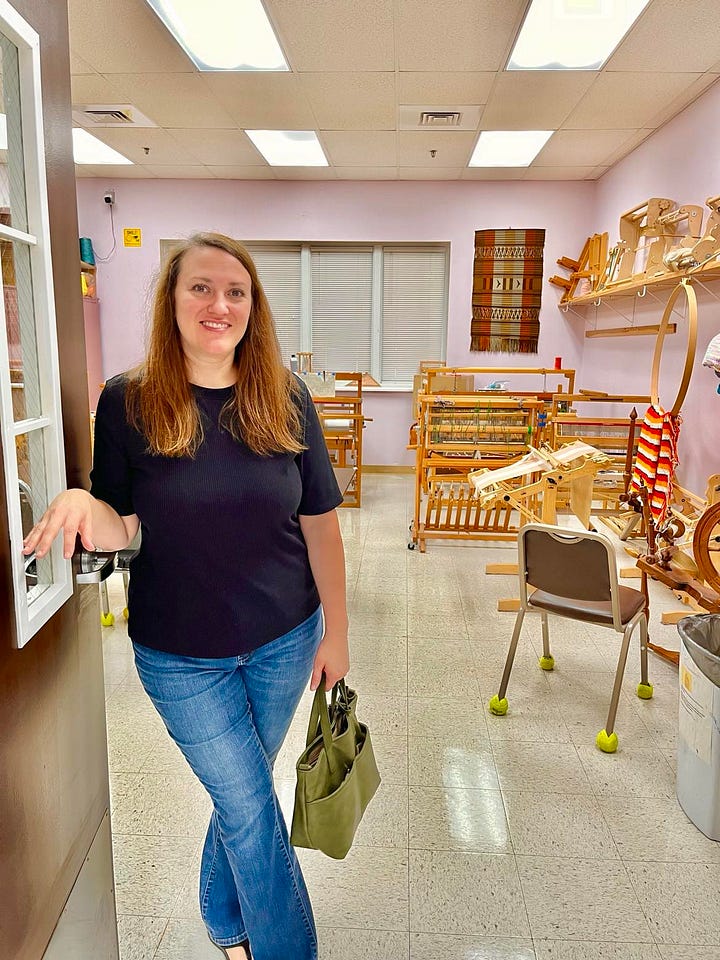
My weaving room at Studio 60

There’s a lot of potential in this new direction I’m heading in, and the stakes are high, but if not now, when? My lease is for one year, so I’m taking it a day at a time. When the end of my year approaches, I’ll reevaluate my plans and adjust as needed. For now, I’m riding this wave of possibility as long as I can.

More tartans & lots of fleece washing

My event season starts on Saturday, September 9th at Pond Springs: General Joe Wheeler Home for a weaving/spinning demo. Then, on October 7th, I’ll be vending at the Rocket City Highland Games & Scottish Festival in New Market, Alabama. On November 4th, I’ll finish up with the Hartselle Holiday Market (Hartselle, Alabama). I’ve been busy weaving tartans, table runners, and washing fleece for handspun yarns & carded fiber batts since June…and I finally feel like I’m making some progress. Check my Instagram page for videos and more photos.

Almost all of my tartan scarves are woven with Peruvian highland wool (Corriedale/Merino cross), but there are a few that will be woven using a merino/silk/cashmere blend. Tartans woven so far include Wallace (hunting & modern), Barclay, Middleton, Robertson, & Gordon.

Since the Southern U.S. is experiencing heat advisories, I’m taking the opportunity to wash fleeces since the drying time is minimal. I’ve washed around 10 pounds in the last two months, but I’m hoping to up my game over the coming weeks. Fleeces include Icelandic, Cotswold, Shropshire, Shetland, & Gulf Coast Native. I’ve also been sampling these fleeces along the way. Some of the excess fiber is now available in my fiber shop, Mythos Yarns & Fibers.

Other recently knitted and woven items: Soundtrack sweater (finally finished; pattern by Marie Greene) using Organic Merino yarn, a handwoven table runner using Zwartbles & Hill Radnor wools, and a handwoven scarf using 1764 Shepherdess hand-dyed Corriedale wool (handspun yarn).

June/July 2023 Update

For weekly updates on my projects/fiber life, sign up for my FREE newsletter from Substack.

I thought I would post some of my recent projects from June/July since I haven’t posted on WordPress for a while. You can find me on Instagram @emily_wallace_handwoven & also on Facebook as @emilywallacehandwovendesigns.

I’m preparing for a Scottish Festival in October, so lots of tartan scarves are on the loom. I’ve started with Middleton, Wallace, and Wallace Hunting–but more will follow.

I’ve also been weaving some handspun table runners for this event (and the holiday market in December). One is from various raw fleeces that I’ve had remnant yarn left over from and the more colorful runner is from another handspun yarn from hand dyed roving (BFL)

I’ve been spinning for the Tour de Fleece as of July 1st and here are my completed yarns so far: Handdyed Corriedale, Zwartbles, Herdwick, Icelandic/Balwen Welsh Mtn, and Shetland (finished but still on the wheel in this picture).

Monday’s knitting project was a raw fleece remnant yarn beanie from Gulf Coast Native, Icelandic-x, Babydoll Southdown, and Shetland.

Early March Update: raw fleeces, projects, and more

As hard as I tried to resist, I ended up going on a fleece-buying rampage in late December and continued into the new year. I told myself that I would shop my fiber stash (and, in my defense, I have done that too), but there were so many new breeds I wanted to try. So, here I am, 20 raw fleeces later–and I’m still ordering more.

I’ve sampled 3 of the Swedish fleeces that I bought in late December (imported from Sweden): Helsinge, Swedish Finull, Rya, Värmland, & Gestrike.

The next raw fleece I bought was a Cotswold fleece from Georgia–another SE2SE breed that I hadn’t worked with–from a sheep named “Rose”.

Cactus Hill Farm had a great sale in January, so I snagged a Wensleydale-X fleece from them. I have washed, carded, and spun a small sample–which turned out amazing.

I found a Scottish Blackface-cross raw fleece on Etsy that I couldn’t pass up. There were only 2# left, so that’s what I ended up with. While it’s fun to spin, it was problematic to ply–so I ended up keeping it as a single-ply yarn.

I also bought some commercially-processed fiber from Hearthside Fibers–all breeds that I hadn’t worked with before: Hebridean, Texel, Bergschaf, Exmoor Horn, Zwartbles, Herdwick, Dehaired Yak, and Lonk. I’ve spun several 100g braids so far, but haven’t gotten through all of them yet.

After ordering a white Miniature Cheviot fleece “Dahl” from Heartsong Hollow Farm (Ottawa, KS), I ended up ordering a black fleece “Snicket” from her a week or so later. I’ve knitted samples from both of those fleeces.

I found Kind Fibers Sheep Sanctuary (Tennessee) on Etsy, so I ordered partial fleeces from 4 of her sheep: “Loral” (Romney/Jacob), “Lilac” (Romney/Jacob), “Andromeda” (Merino/Romney), and “Peppermint Patty” (Romney). I’ve sampled three so far–and knitted a sample from Lilac’s fleece sample.


I also knitted a beanie from the Manx Laoghtan fiber I bought from Hearthside Fibers and spun a few years ago. That was my first knitted project of 2023.


I have an American Tunis raw fleece that arrived from Oregon (Mystic Rose Reds) this week, but I haven’t started any processing on it yet. I’m also ordering a California Red fleece from her as well, but it hasn’t shipped yet.

American Tunis raw fleece “Penny Candy” from Mystic Rose Reds (Oregon)

In late December, I ordered some British raw fleece samples (100g each) from Marie Redding Arts on Etsy. I knew from reading reviews that it would be a long wait time (mail strikes, etc.), but apparently, my package got lost in the mail, so Marie mailed another package and I received it this week –minus about 400g of another fleece that I ordered from her (which is on the way, hopefully). Breeds include: Tyrolean Rock Sheep, Soay, Lonk, Lleyn, Boreray, Hebridean, Castlemilk Moorit, Swaledale, and Shetland.

All-in-all, not a bad start to 2023. I’ve definitely been spinning a lot more than 2022, but I suppose that goes without saying since I was ill most of the year.

EEW Nano 2 E-spinner

After years of deliberating about an e-spinner, I finally decided to buy one from Dreaming Robots–mostly because their EEW Nano 2 is the least expensive e-spinner on the market and I have a few friends who have one.

After the e-spinner arrived, I set it up exactly how the video said to (though it was mostly set up on arrival). I had major issues with the uptake and had the tension knob so tight, I was afraid it might break. The spinner didn’t spin anywhere near fast enough on the highest setting and I was getting frustrated and seriously disappointed with my purchase.

After meeting with one of my friends who had bought a Nano years ago, I decided that I should contact Dreaming Robots about my e-spinner. My friend’s spinner was at least twice as fast and her tension knob barely had to be tightened to have good uptake. Surely, there was something wrong with mine.

After a few emails and a couple of troubleshooting links, I figured out what the issue was. The orifice reducer on mine was causing all the problems. It wasn’t visibly malformed like the one in the troubleshooting video, but once I removed it, my e-spinner started working great. (The reducer is optional to use, so it’s no big deal if it isn’t on while spinning.)

EEW Nano 2 e-spinner with reducer removed

For $125, the EEW Nano 2 e-spinner is a good tool to have for sampling, especially if you’re like me and not planning to use it as your main spinning tool (my double-treadle Lendrum is my workhorse spinner of choice). And, the customer service is excellent. Dreaming Robots does have a bigger model e-spinner, so I may look at it in the future. For now, I’ll enjoy the Nano.

New to the flock: Timmy

A week or so before my surgery at the end of July, my GCN-cross ewe Mocha died suddenly. This left us with Tilley and Mocha’s lamb, Sean (now a wether), so I decided that we needed another sheep to round out the backyard flock.

My friend and nearby GCN sheep farmer had several wether lambs that she needed to get rid of, so I bought the smallest one she had and we brought home Timmy–the smaller of a set of ram twins.

Timmie is pure Gulf Coast Native wether–his parents are from a flock who were originally in Mississippi–and he is super sweet.

He and Sean were born within a week of each other, but he’s a good bit smaller than Sean (probably because Timmy is a twin and Sean was a singleton).

Timmy loves animal crackers, so now all three of the sheep get them as treats on a regular basis.

Raw Fleece to Finished Objects: Babydoll Southdown Beanie Projects

For the last several weeks, I’ve been working on a raw fleece project for a local sheep farmer who raises Babydoll Southdown sheep. She needed three beanies for Christmas gifts, so I got to work as soon as I got the fleece from her. I’ve worked with her sheep fleeces before, so I was pretty familiar with the wool breed. It’s not my favorite breed of sheep wool to work with, but I was willing to knit beanies since they don’t take a long time.

The main issue with the fleece was the short staple length (about 1.5″ after scouring) and the amount of very small VM in the wool. In the end, I was able to produce a decent 2-ply yarn though.

End products: two adult beanies & one baby beanie using two-ply, worsted/aran weight yarn. One of the adult beanies was a bit smaller than the other (length-wise), but it still fits an adult head easily. I used a different pattern for the smaller one, so that was the reason for the difference between the two adult beanies.

All three beanies together weigh 4.25 ounces, so I probably used about 10-12 ounces of raw fiber for the yarn; less than 300 yds of 2-ply yarn.

A little Targhee spinning

I got back on my wheel a few days ago, trying to get my mojo back after surgery. Now that I can physically spin and do other fiber-related activities again, I’m having trouble deciding what to do. I’ve had a bit of brain fog since I came home–which probably explains some of the indecisiveness. I finally decided to grab some fiber and start spinning. I wish I could say that this instantly brought back my fiber mojo, but I guess it’s a start.

I’ve suffered burnout before–after 6 years of full time fiber arts–but this feels different. It’s not that I don’t want to do something with my fiber and yarn. It’s almost like I can’t concentrate when I get started on something. I’ll cast-on yarn for a beanie and then after a few rows, I’m already sick of the project. I’m sure this will eventually pass and I’ll be back at it full steam in a few weeks. I’m trying to be patient with myself for now since I haven’t even reached the 6 week post-surgery mark yet. A little spinning is better than no spinning, so that will have to be enough for now.

Hand dyed targhee wool on the wheel

Tour de Fleece 2022, Surgery, and more

I only made it through about ten days of this year’s Tour de Fleece–mostly because I was prepping for major abdominal surgery on July 20th and there was a lot to take care of before my hospital stay (3 days, 2 nights) and 6-8 week recovery.

Here are the yarns that I did spin during the Tour: White Eider, Leicester Longwool, Pineapple fiber, Navajo Churro, Shetland (Cherry Pie from Ballyhoo Fiber Emporium), Rambouillet, and CVM (from Cactus Hill Farm).

I also started experimenting with Krokbragd weaving (or my version of it, at least) before my surgery. I’ve made two coasters so far, but they aren’t completed yet, so here is a picture of the first one still on the loom.

A week after my surgery, I moved back into my original home studio space after my daughter decided she wanted her old room back (after asking to move into my space over a year ago), so I directed my husband and daughter as they moved my things since I couldn’t lift anything over ten pounds yet. Only 10% of my yarn and fibers are actually in the room (most are in the closet and other storage places around the house), but my main equipment is there, so it’s a nice, clean slate to work from when I start feeling up to it.

Because of the move, I was able to find some objects that were buried among my other fiber things. These are ancient drop spindle whorls from all over the world that I started collecting years ago. Three are from Central and South America, while the rest are from Latvia, former Yugoslavia, Northern Ireland, and somewhere else in Europe. Apparently, archaeologists find spindle whorls all the time at dig sites, but they get stored away because they are so “common” and insignificant.