Tour de Fleece, Day 7: American Tunis wool (washed/carded from raw fleece) results from 38g; 97 yds of 2-ply (DK weight) yarn.
This wool came from an American Tunis raw fleece from Solace Farms in Coalmont, Tennessee.
A blog about fiber arts and textiles

Tour de Fleece, Day 7: American Tunis wool (washed/carded from raw fleece) results from 38g; 97 yds of 2-ply (DK weight) yarn.
This wool came from an American Tunis raw fleece from Solace Farms in Coalmont, Tennessee.


Day 6 of Tour de Fleece: Navajo Churro wool (washed/carded from raw fleece) 48g; 97 yds 2-ply DK weight.
Today I decided to sample the Navajo Churro raw partial fleece I bought as part of the SE2SE (Shave ‘em to Save ‘em) project. This light silver fleece came from Mesa Weavings in Colorado.


Day 3 of Tour de Fleece:
Gulf Coast Native ram from Yellow Bell Farmstead, Arab, AL (washed/carded from raw fleece)
58g yielded 158 yds (2-ply, Sport weight)


Day 2 of Tour de Fleece: more Icelandic (Ram & Lamb fleeces): 17g; 40 yds 2-ply sport weight (white Icelandic) and 44g ; 97 yds DK weight 2-ply of brown and white Icelandic lamb. 137 yards total.


I’ve (mostly) decided that today’s arrival is my last raw fleece purchase this year. (Unless someone decides to give me more fleeces or I get an out-of-this-world deal). I’m thinking I’ve bought approx. 200 pounds total of raw fleece–give or take a few pounds, so I should be good for a while.
I’ve been prepping fiber since April in order to participate in the Tour de Fleece this year (starting June 26th), and then, that yarn will be used to weave and knit this season’s collection that I’ll sell online and in my studio. I’ve never “officially” participated in the Tour de Fleece, so I’m looking forward to seeing how much yarn I get spun during the event.
I did move most of my fleeces upstairs to my fiber room at my home, but almost half are still in my out building until they get ready to be washed/scoured + processed.
*I am a full time textile artisan and fiber arts instructor…which is the only reason I have this many fleeces/fiber (for those who may ask “why on earth would one person want/need that many fleeces?”).

Today’s shipment of 4 fleeces included 3 CVM & 1 BFL ram fleece from Cactus Hill Farm in Colorado.


Breeds of wool bought as raw fleece this year:
Gulf Coast Native
American Tunis
Debouillet
Shetland
Icelandic (and Icelandic crosses)
Finn/Cormo cross
Navajo Churro
Clun Forest
Dorset Horn
Shropshire
Lincoln Longwool
Lincoln/Targhee cross
Florida Cracker
Hog Island
Babydoll Southdown
American Jacob
CVM (California Variegated Mutant)
I processed just enough of the Babydoll Southdown raw fleece (New Hope, Alabama) to knit a beanie for the lady who owns these sheep.
Even though the staple length was fairly short, my drum carder prepped the fiber enough for me to spin a 2-ply DK weight yarn from this soft, squishy fiber.
Since I bought 4 fleeces total of this fiber, I’m looking forward to trying other projects using this wool.


Icelandic, Icelandic crosses, and a few other fleeces (10 total) arrived from Ballyhoo Farms (Bagdad, Kentucky) today. I went a bit crazy when she showed me all her available fleeces. I’ve bought Shetland fleeces from her in the past and already bought one Icelandic (Akoya) that I wrote about in a previous post. I loved Akoya’s fleece so much that I had to get more from the farmer. All ten fleeces came in a medium sized box…weighing in at around 33 pounds. And, it arrived from Kentucky to me (in North Alabama) in just a couple of days…which is saying a lot for USPS at the moment, considering it took a full month for me to get ONE 3 pound fleece from Louisiana.


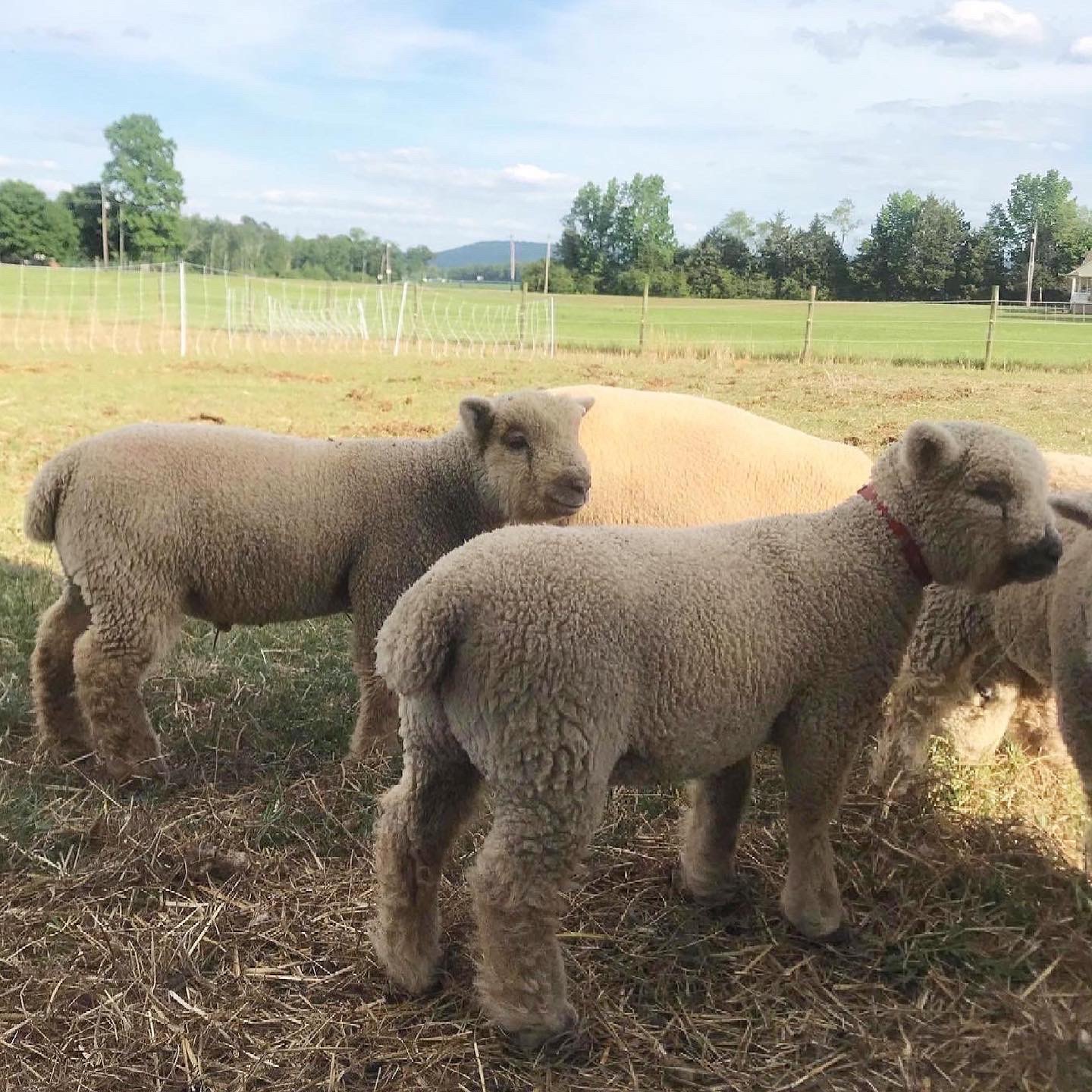
I also brought home two Babydoll Southdown fleeces last night from a farm about 50 minutes away from me. The owner (a local small animal Vet) reached out to me on social media about her fleeces and I couldn’t resist trying some since I’ve never seen or worked with this breed before. As soon as I got home last night, I washed/scoured a 5 oz sample of one of the fleeces, so hopefully, the wool will be dry enough in a few hours to start carding.


🐑 My weaving studio is partnering with Alchemy Farms and Plants to bring you this workshop series where you’ll learn to process a raw fleece from the ground up…with Gulf Coast Native sheep fleeces raised at Alchemy Farms near Huntsville, AL!
Saturday, May 22: Washing a raw fleece (Class fee includes 1 lb. raw fleece & supplies)
Saturday, June 5: Prepping washed fleece for spinning (Class supplies included)
Saturday, June 19: Spinning fiber using drop spindle (Drop spindle included in class fee)
Saturday, July 10: Choosing finished object for spun yarn (yarn calculations, pattern options, etc.)
*for those who choose not to spin their own yarn, spinning service will be available

Raw fleece washing began this week after I picked up nine more fleeces from a local farm. I had picked up three Gulf Coast Native fleeces from the Huntsville area on Friday–all of which were only lightly skirted, if that. Three of the nine fleeces were put in water in dark storage bins outside to begin the fermented suint method of cleaning…and one of the three GCN fleeces from Huntsville was also put in a bin using this method. I’ll check the first batch of three this Sunday to see how the process is going, but more than likely, they’ll stay in a full two weeks before they’re ready to be rinsed.
Total fleeces bought this season: 9 whole GCN fleeces (Gulf Coast Native), 6 GCN cross whole fleeces, 1 Tunis whole fleece, 4 pounds of Debouillet fleece, 1 pound of partial GCN fleece. So, 16 whole fleeces and 5 pounds of partial fleeces ( Debouillet and GCN bought by the pound).
The remaining fleeces will be cold washed, dried, and stored until I’m ready to scour them. Because I have so many fleeces right now, I’ve chosen to cold wash them rather than scour them right away–mostly because of the time and amount of hot water it would take to get all of them clean. Cold washing removed the dirt, poop, and some of the VM–enough that I can store the fiber until I’m ready to scour it. I usually only scour in 1 pound increments (tops), since I process everything by hand. This makes it more manageable and it allows me to sample fleeces instead of processing each whole fleece from start to finish before I can move on to the next fleece.
So far this week, I’ve scoured around 4 ounces of the GCN ram fleece that I spun in the grease on Sunday. I did this in my kitchen since it was a small amount. While that was soaking, I started cold washing a GCN fleece (Alchemy Farms) outside and it is still on the rack drying after about 3-4 cold soaks. I now have another GCN fleece (Alchemy Farms) soaking today while the first one dries.


I’ve probably mentioned at some point in this blog that I’m not a huge fan of spinning merino wool. Don’t get me wrong, I like knitting and weaving with merino yarns, but I’m just not a huge fan of spinning it…probably because when I first started spinning, I attempted to spin merino (I was learning on my own with no guidance) and it was a disaster. I almost quit spinning before I had even started good because of merino. So, yes, I do spin merino, but it’s not my favorite fiber by a long shot.
With the preamble aside, I found some raw Debouillet fleece for a great price on Etsy…and after reading how rare it was to find, I ordered 2 pounds from Marathon Basin Wool Mill (Marathon, TX).
The Debouillet breed is part of the Merino family (hence the rant on merino earlier), originally created by crossing a Delaine Merino with a Rambouillet.
According to the Fleece & Fiber Sourcebook:
Origin: United States (New Mexico)
Fleece weights: 9-18 pounds
Staple lengths: 3″-5″
Fiber diameters: 18-24 microns
Natural colors: White
The raw fleece arrived last week, but I was busy combing some of the washed GCN (Gulf Coast Native) wool, so I put it aside until this week. When I pulled half of the fleece out for washing yesterday, I realized that this wool was going to be lanolin heavy (like all merinos), so I started with hot water instead of doing a few room temp washes before scouring. This is the first raw fleece I’ve washed in my kitchen sink, but knowing all the hot water I would be using, I didn’t see another choice.
I did two initial (super) hot water washes with DAWN and that cleared most of the dirt and lanolin out. I then followed with two warm water rinses until the water was mostly clear. Because I’ll be washing this again when it’s spun and woven, I didn’t want to strip all the lanolin out with the initial washes. The fleece was laid outside to dry in the sun until sundown and I’ll be checking on it later today. When it was mostly dry, I could tell that the fleece was going to be really soft, so I’m looking forward to processing it to spin. It does have A LOT of vm in it, so we’ll see how that goes. I only washed around a pound of the fleece, so hopefully, that’ll make it more manageable.
*If a fleece is heavily soiled, I usually start with tepid water rinses (no soap) to clear out dirt & VM as it saves on hot water use and trips back and forth to the stove since I wash most fleeces outside.


 Diary of a Yarnophile